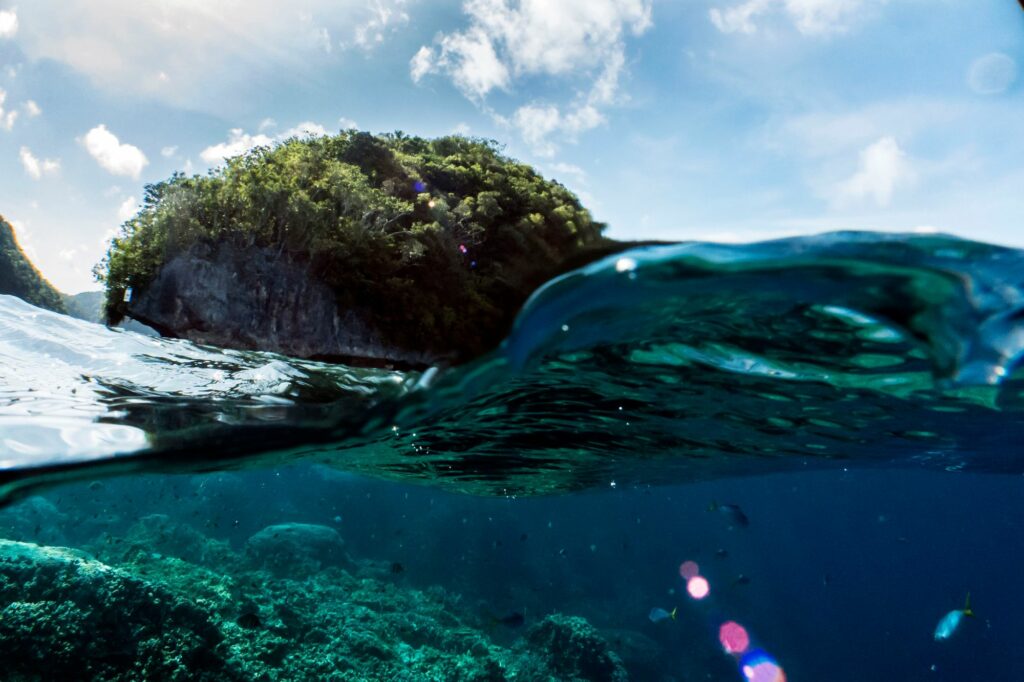
The high seas are a lawless frontier where crimes such as murder, slavery and environmental destruction are often met with impunity and overlooked by the media. But the ocean is also a place of discovery and reinvention, offering freedom from the constraints of society.
Two-thirds of the planet is covered by water, and much of that space is ungoverned. Human rights and environmental crimes occur often and with impunity in this realm, because the oceans are sprawling and what laws exist are difficult to enforce.
The global public is woefully unaware of what happens at sea. Journalism about and from the oceans is rare. The result: most landlubbers have little idea of how reliant we are on the people who work the water. Half of the world’s population now lives within a hundred miles of the sea, but most people conceive of this space as a liquid desert that we occasionally fly over, a canvas of lighter and darker blues.
Part of the problem is in our heads. The oceans are typically and correctly viewed as a marine habitat. But they are much more than that. They are a workplace, a metaphor, an escape, a prison, a grocery store, a trash can, a cemetery, a bonanza, a tinderbox, an organ, a highway, a depot, a window, an emergency, and, above all, an opportunity. Unless we reckon with this truth, unless we reimagine this domain more broadly, we will continue falling short in governing, protecting, and understanding the oceans.
Continue reading
To Reimagine the Realm
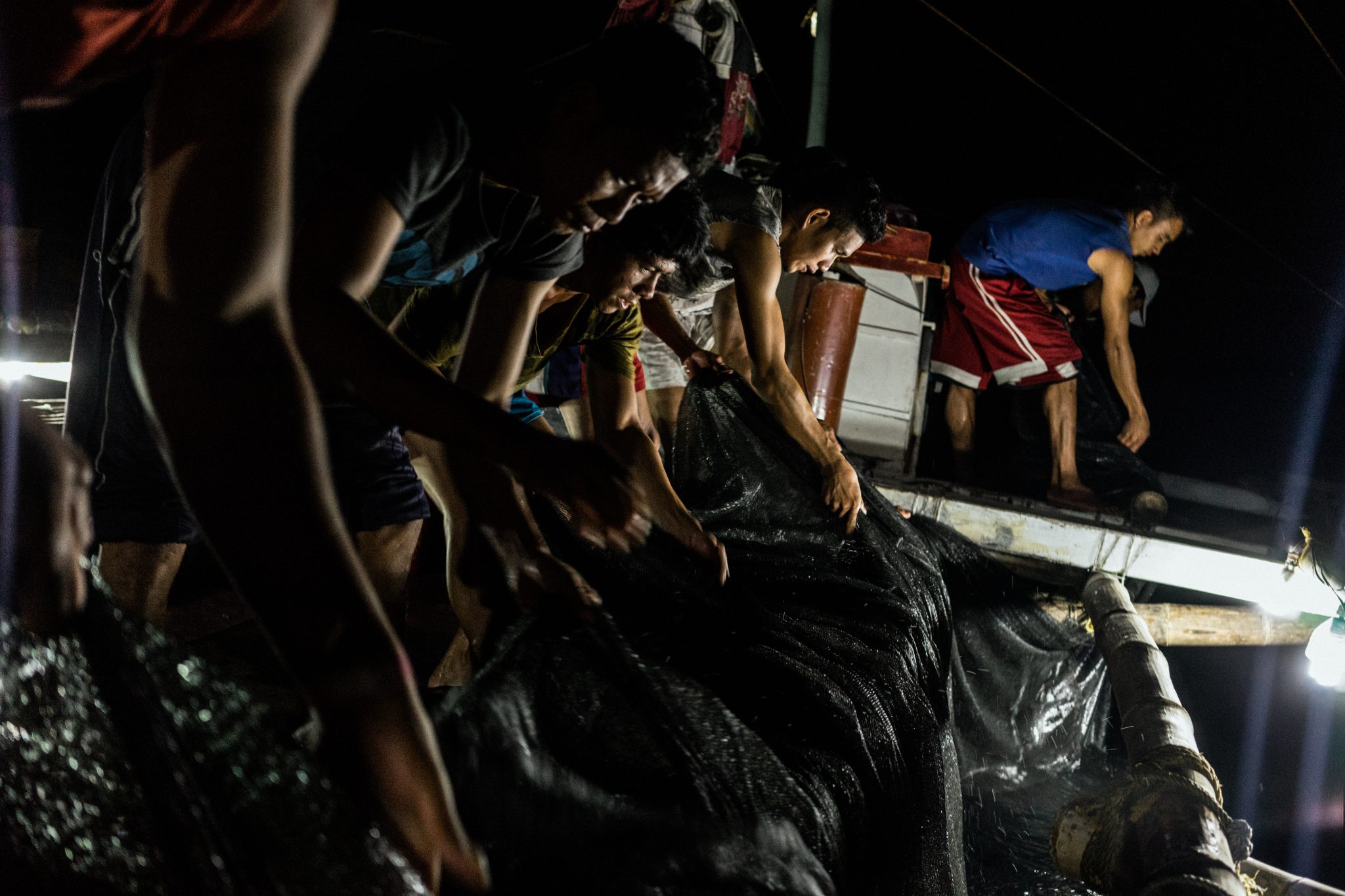
Men pull anchovy nets off the coast of the Philippines.
THE OCEANS ARE A WORKPLACE. More than 50 million people work offshore. Anthropologically, these workers make up a fascinating demographic. A transient and diaspora tribe, they have their own lingo, etiquette, superstitions, social hierarchy, codes of discipline, and catalog of crimes. Theirs is a world where lore holds as much sway as law. Many of these people work in fishing, which is the world’s most dangerous profession, resulting in more than 100,000 fatalities per year – more than 300 a day. Conditions on many distant-water fishing boats are notoriously brutal. Violence, trafficking, and neglect are common. The intensity, injuries, hours, and dirtiness of the work is Dickensian. In rough weather, sea swells climb the sides of a ship, clipping the crew below the knees. Ocean spray and fish innards make the deck skating-rink slippery. Seesawing erratically in the rough seas and gale-force winds, the deck is often an obstacle course of jagged tackle, spinning winches, and tall stacks of five-hundred-pound nets. Infections are constant. On these ships, antibiotics for rancid wounds are rare. But captains typically stock plenty of amphetamines to help the crews work longer.
THE OCEANS ARE A METAPHOR. This place offshore has long connoted infinity, sui generis abundance, tireless plenty. Henry Schultes captured this notion in 1813, when he wrote, “In addition to a highly productive soil, the seas which surround us afford an inexhaustible mine of wealth—a harvest, ripe for gathering at every time of the year—without the labour of tillage, without the expense of seed or manure, without the payment of rent or taxes.” The 1954 book The Inexhaustible Sea, by Hawthorne Daniel and Francis Minot, continued with this thinking: “We are already beginning to understand that what it has to offer extends beyond the limits of our imagination—that someday men will learn that in its bounty the sea is inexhaustible.” Such ideas have dominated our thinking for centuries. If the oceans are so vast and indestructible, if they can replenish themselves so boundlessly, why bother restraining ourselves in what we take from it or dump into it?
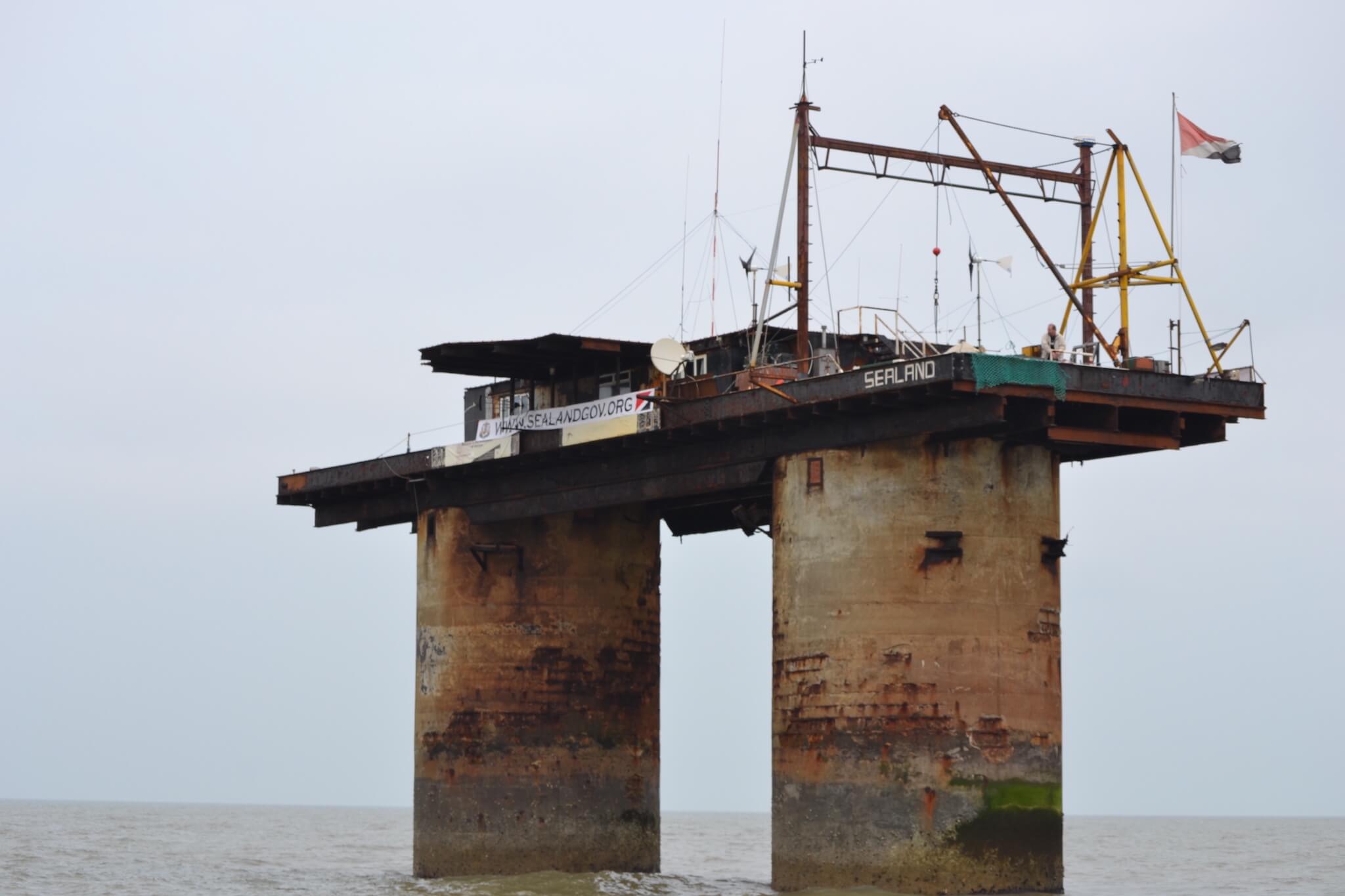
A view of Sealand from the water.
THE OCEANS ARE AN ESCAPE. For centuries, life at sea has been romanticized as the ultimate expression of freedom—a refuge from landlocked life, distinctly removed from government meddling, a chance to explore, to reinvent. This narrative has been locked deep within our DNA for eons, starting with stories of daring adventurers setting off to discover new lands. Full of devouring storms, doomed expeditions, shipwrecked sailors, and maniacal hunters, the canon of sea literature offers a vibrant picture of a watery wilderness and its untamed rogues. And at least since Jules Verne’s Twenty Thousand Leagues Under the Sea was first published, in 1870, people have dreamed specifically of using this freedom to create permanent colonies on or under the ocean. This tradition continues. Today, a small set of libertarians who call themselves seasteaders, named after the homesteads of the American West, still chase the dream of founding independent nations in international waters in the form of self-sufficient, self-governing, sea-bound communities.
THE OCEANS ARE A PRISON. Far from escape or recourse, ships at sea are for many workers a jail without bars. Every year tens of thousands of men and boys are bought and sold like chattel, and then find themselves stuck in bondage, sometimes for years—and even in shackles—on distant water fishing ships. There is a growing sense that cell phones have become a kind of police force to counter such abuses in almost all aspects of life. If something bad is happening, it will likely be captured and posted for the world to see on YouTube – or so the logic goes. But that rarely occurs at sea, where crews often work in indentured servitude and have no access to their phones. With rising fuel prices and fewer fish close to shore, maritime labor researchers predict that more ships will resort to venturing farther out to sea, staying offshore longer, making this type of mistreatment more likely. At-sea captivity comes in other forms, too. Hundreds of seafarers are abandoned annually in a watery purgatory. The backstory follows a standard pattern. Having stretched their resources to the limit, cash-strapped shipowners declare bankruptcy. Cutting their losses, they disavow their ships, stranding crew members, who are usually still on board, far off at sea or anchored in a foreign port. Like the crew of the Flying Dutchman, these men are left to roam or sit and wait. Usually, they lack the immigration papers to come ashore, the resources to get home, or means to get word to their families. Annually, there are thousands of these men globally, languishing at sea, slowly falling apart, physically and mentally.
THE OCEANS ARE A GROCERY STORE. The oceans offer global humanity a vital form of sustenance. More than 50 percent of the animal protein people consume in some parts of the developing world comes from seafood, which is the largest globally traded food commodity by value in the world, at roughly $151 billion in 2020. But, as fishing historian Paul Greenberg has pointed out, the treatment and conception of the oceans is partly influenced by how we think about fish. Aquatic creatures have typically been considered a lower order of life. In German, French, Spanish, and most other western European languages, seafood is “sea fruit.” An entire ecosystem that encompasses millions of species of creatures is lumped together in popular consciousness, consisting not of distinct animals but as things we consume. Meanwhile, we are taking way too much from this grocery store. During the past 50 years, global seafood consumption has risen more than fivefold, and the industry, led by China, has satisfied that appetite through technological advances in refrigeration, engine efficiency, hull strength, and radar. Satellite navigation has also revolutionized how long fishing vessels can stay at sea, and the distances they travel. Industrial fishing has now advanced technologically so much that it has become less an art than a science, more a harvest than a hunt. The consequence is that more than a third of the world’s stocks are overfished.
THE OCEANS ARE A TRASH CAN. For centuries, humanity has seen the seas as so vast as to have a limitless ability to absorb and metabolize all, a perception that has given us license to dump virtually anything offshore. Oil, sewage, corpses, chemical effluvium, garbage, military ordnance, and even at-sea superstructures like oil rigs disappear into the ocean, as if swallowed up by a black hole, never to be seen again. The real crime of ocean dumping, though, is that for most of history it was not even considered a crime. The law has since changed, but habits persist. Oil spills evoke outrage, but they amount to far less than the amount of oil that’s deliberately dumped into the water each year . Every three years, ships intentionally dump more oil and sludge at sea than the Exxon Valdez and BP spills combined. Other sources of dumping come from above: the ocean’s levels of dissolved oxygen have skyrocketed, not to mention the amount of carbon that gets dissolved. And as rainfall crosses land, it picks up sewage, fertilizers, detergents, and microplastics, and carries them straight into the world’s oceans. This nutrient runoff feeds excessive algal and microbial growth creating “dead zones,” some the size of Scotland.
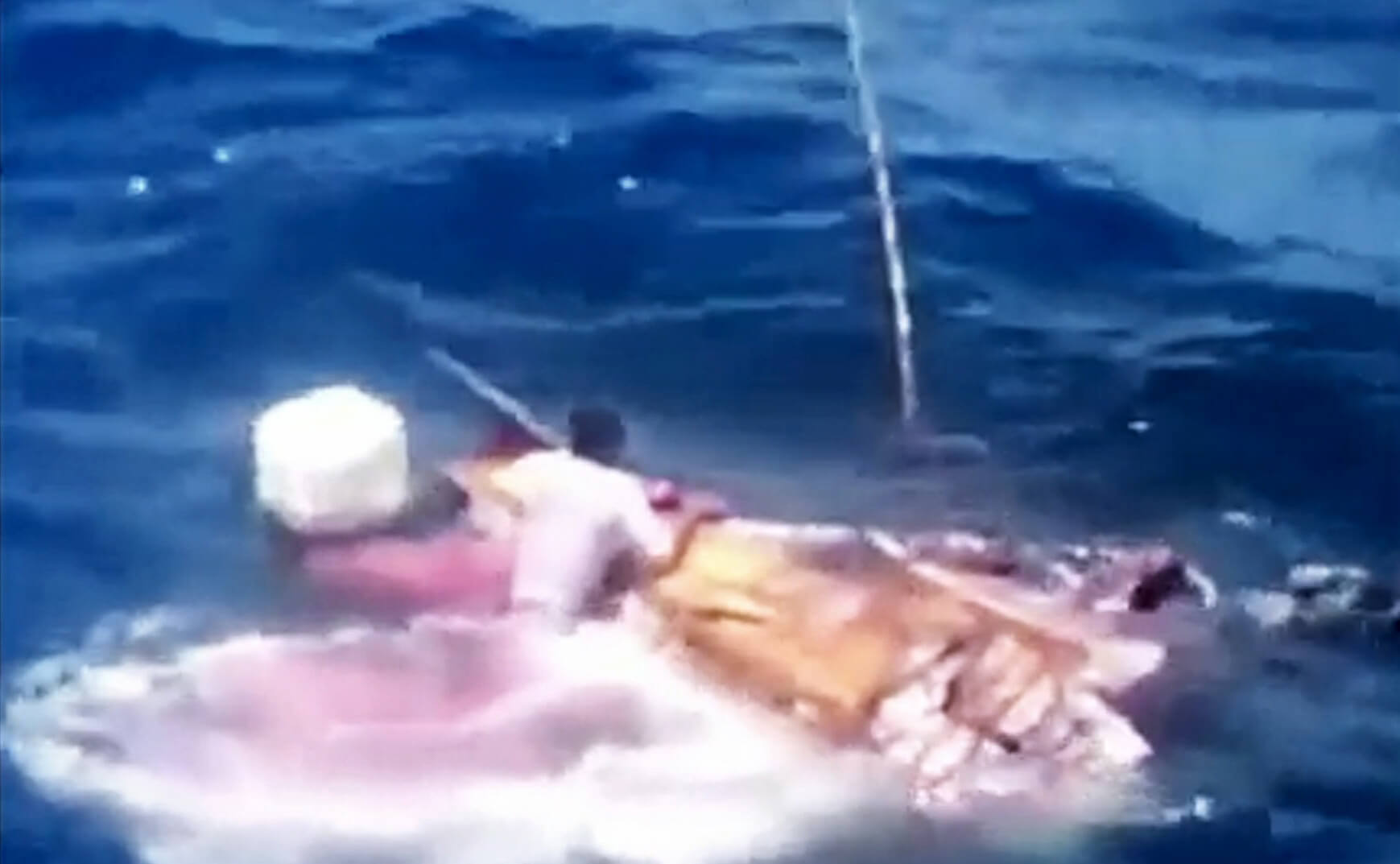
Man clings to a small boat right before he is murdered.
THE OCEANS ARE A CEMETERY. On land, police can dig up graves to investigate murders. Offshore, “the dead stay gone,” as one maritime researcher put it. Not only are the oceans a burying ground but they also usually bring the added benefit of impunity. Murderers on a ship can film themselves in the act, pose for celebratory selfies at the end of bloodletting, and quite possibly get away with the crime, because few governments have the motivation or jurisdiction to do anything about it. No evidence, no autopsy, no crime scene, no prosecution. Thousands of migrants disappear offshore each year—many of them in the Mediterranean Sea, for example, as they try desperately to cross over to Europe from launching points in Libya, Morocco, and Tunisia. When rough seas or human traffickers or the Libyan Coast Guard overturn these crowded rafts, their passengers don’t just drown. Their bodies disappear into a blackness that conceals world notice. And so the sinister cycle continues.
THE OCEANS ARE A BONANZA. Notwithstanding the “oversight” of various anemic and often corrupt oversight bodies, the high seas offer humanity a bonanza—a take-as-you-please free-for-all. Unregulated fishing is the norm in international waters. And there is far more on offer at sea than food. Oil and gas drillers, seabed miners, treasure hunters, wreck thieves, and biomedical prospectors know this all too well. The oceans are full of goods that much of the world feels is just there for the taking.
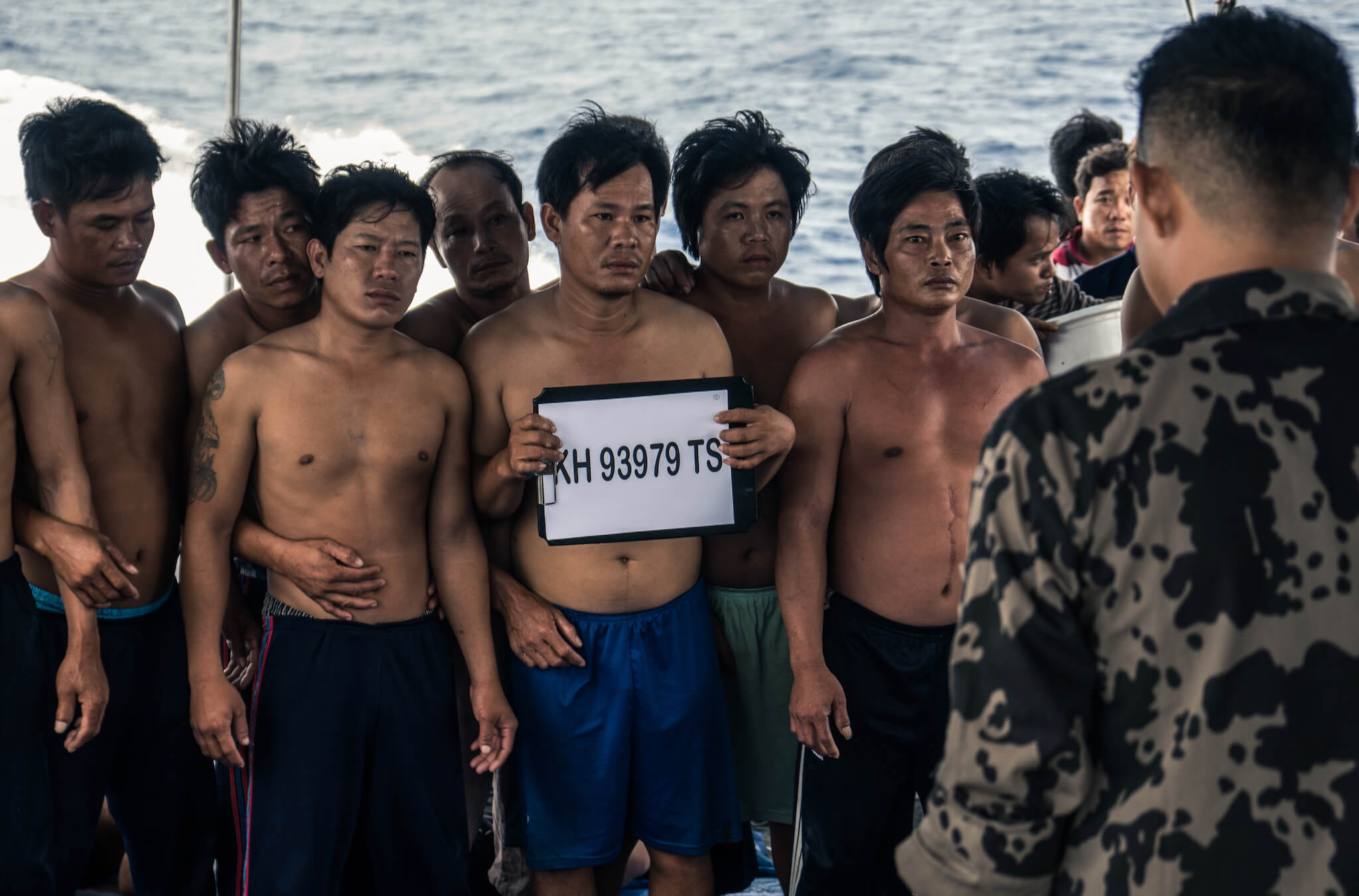
Arrested crew from a Vietnamese fishing boat are photographed and booked.
THE OCEANS ARE A TINDERBOX. Because the oceans are a liminal space, where jurisdiction is less clear than on land, and borders are drawn on water, this realm is also a frontier where clashes are more likely. Proxy fights happen frequently at sea, typically with one country arresting the fishing ship of another country, claiming an incursion into their territory. Geo-political tests of sovereignty, might, and daring happen on these outer edges. For this reason, the oceans are a powder keg—the place where some political scientists predict the spark of a next big military explosion might occur.
THE OCEANS ARE AN ORGAN. The lungs of the globe, the oceans produce half of the oxygen we breathe. But as we burn more fossil fuels and release more carbon into the air, much of it dissolves and suffocates the water, thus killing the planet. The ocean has also already absorbed 90 percent of the excess heat from global warming, and today is 30 percent more acidic than it was before the Industrial Revolution.
THE OCEANS ARE A HIGHWAY. The high seas are the expressway of world commerce. At the core of modern maritime culture is a 17th-century belief in non-interventionism and a legal tenet known as mare liberum, Latin for freedom of the sea, which argued that in the waters beyond the range of a cannon shot to shore, mariners should be free to pursue commerce however they want, unfettered by states, pirates, or anyone else. A prerequisite to free trade, the doctrine is regularly invoked to block stricter rules and more enforcement on the high seas. In today’s globalized economy, part of the reason that more than 70 percent of the products we consume travels by ship is that the high seas are distinctly less encumbered with borders and bureaucracies.
An MNG employee inspects a rifle in the armory of the MNG Resolution.
THE OCEANS ARE A WEAPONS DEPOT. Plied by more ships than ever before, the oceans are also more armed and dangerous. Starting in 2008, as pirates began operating across larger swaths of the ocean, many merchant vessels hired private security, and their forces soon outstripped governments’ policing abilities. A $20-billion private security force today operates at sea, and when its members kill, governments rarely respond, because no country holds jurisdiction in international waters. The arms race at sea has escalated to the point that guns and guards are so ubiquitous that a niche industry of floating armories has emerged. Part storage depot and part bunkhouse, these vessels, positioned in high-risk areas of international waters, house hundreds of assault rifles, small arms, and ammunition, along with guards who wait sometimes for months in decrepit conditions for their next deployment.
THE OCEANS ARE A WINDOW. The high seas offer a glimpse into human nature. They let us look at the line between civilization and the lack of it. They show us how thin that line is, and what’s on the other side. Largely beyond the reach of governments and law enforcement, the oceans demonstrate how people behave when they can do as they please and get away with it. This is not always bad. Sometimes it’s heroic. But almost always, it’s extra-legal. The high seas are an outlaw ocean.
THE OCEANS ARE AN EMERGENCY. For all its importance and breathtaking beauty, the sea is also a dystopian place, home to dark inhumanities. Too big to police and under no clear international authority, immense regions of treacherous water play host to rampant criminality and exploitation. Acidification is decimating most of the world’s coral reefs. Most of the world’s fishing grounds are depleted. Overfishing, often boosted by government subsidies, means smaller catches closer to shore and an industry becoming more desperate. One out of every five fish comes from pirate fishing vessels. Hundreds of stowaways and migrants are killed at sea annually. Somewhere in the world, at least one ship sinks every three days.
Gentle waves in the western Pacific Ocean.
THE OCEANS ARE AN OPPORTUNITY. Not just a gritty netherworld, the oceans are a place of impossible beauty and marvel. They represent a chance for salvation. Can governments find common good above self interest and cooperate toward managing the high seas? The recent UN treaty on biodiversity was a step in this direction. Might the oceans now offer opportunities to mitigate the climate crisis? Protecting and restoring ocean habitats such as seagrasses, salt marshes, and mangroves, along with their associated food webs, for example, can sequester carbon dioxide from the atmosphere at rates up to four times higher than terrestrial forests can. Offshore wind energy has the potential to contribute more than 7,000 terawatt hours per year of clean energy in the United States alone—roughly double the amount of electricity used in the United States in 2014. Cargo vessels and passenger ferries emit nearly 3 percent of global greenhouse-gas emissions, including black carbon, an especially dirty type of smoke. Decarbonizing the global shipping fleet would be roughly equivalent to cutting all of Germany’s carbon emissions.
A first and essential step to countering these many problems is to broaden our thinking about the oceans. Dispatches from the Outlaw Ocean is a documentary series that offers a sober tour through this untamed frontier. It chronicles a colorful cast of characters, from traffickers and smugglers, pirates and mercenaries, to vigilante conservationists and elusive poachers, clandestine oil dumpers, and shackled slaves. The goal of the journalism is to stoke urgency and to help the global public reimagine the oceans not as a thing that we take for granted, a bottomless trash can, a forever self-replenishing resource that we use to fill our stomachs or line our wallets, but instead as a vast habitat that we should leave alone, a workplace needing regulation, less a grocery store than a library or a cathedral, a protected common.